How to Choose the Right Dubai Desert Safari for Your Trip
A desert safari is often the highlight of a visit to Dubai. With dozens of operators offering packages, it can be hard to tell which one matches what you actually want. Some trips focus on dune bashing and adrenaline, others on cultural experiences or fine dining under the stars. The right choice depends on who you are travelling with, what time you have, and the kind of experience you hope to take away.
Step 1: Decide on the Time of Day
The most basic split is between morning and evening safaris. A morning safari usually starts early, includes dune bashing, a short camel ride, and often a visit to a camel farm or a brief stop at a heritage site. It ends by lunchtime. These trips are shorter and cheaper, and they work well if you have a tight schedule or are travelling with young children who may not manage a late night.
Evening safaris are more popular. They begin in the late afternoon, include sunset photography stops, a longer camp experience, and usually a barbecue dinner with live entertainment such as tanoura dance or belly dancing. They run until around nine or ten at night. If you want the full desert atmosphere, the golden light, and a relaxed evening, this is the better pick.
A third option, though less common, is an overnight safari. It includes the evening programme plus a night in a tented camp, breakfast at sunrise, and a morning drive back. It suits travellers who want a more immersive desert experience and do not mind basic sleeping arrangements.
Step 2: Choose Your Activity Level
Dune bashing is the core of most safaris. A 4x4 vehicle drives over steep sand dunes at speed, creating a roller-coaster sensation. If you or anyone in your group has back or neck problems, or gets motion sickness easily, this can be unpleasant. Some operators now offer gentler desert drives in larger vehicles, or you can request a private tour where the driver adjusts the pace.
For those who want thrills, look for a safari that specifies "extreme dune bashing" or "red dune safari." The red dunes near the Al Lahbab area are steeper and softer, which makes for a more dramatic ride. For a calmer experience, choose a trip that emphasises a "desert drive" or "nature tour" rather than bashing.
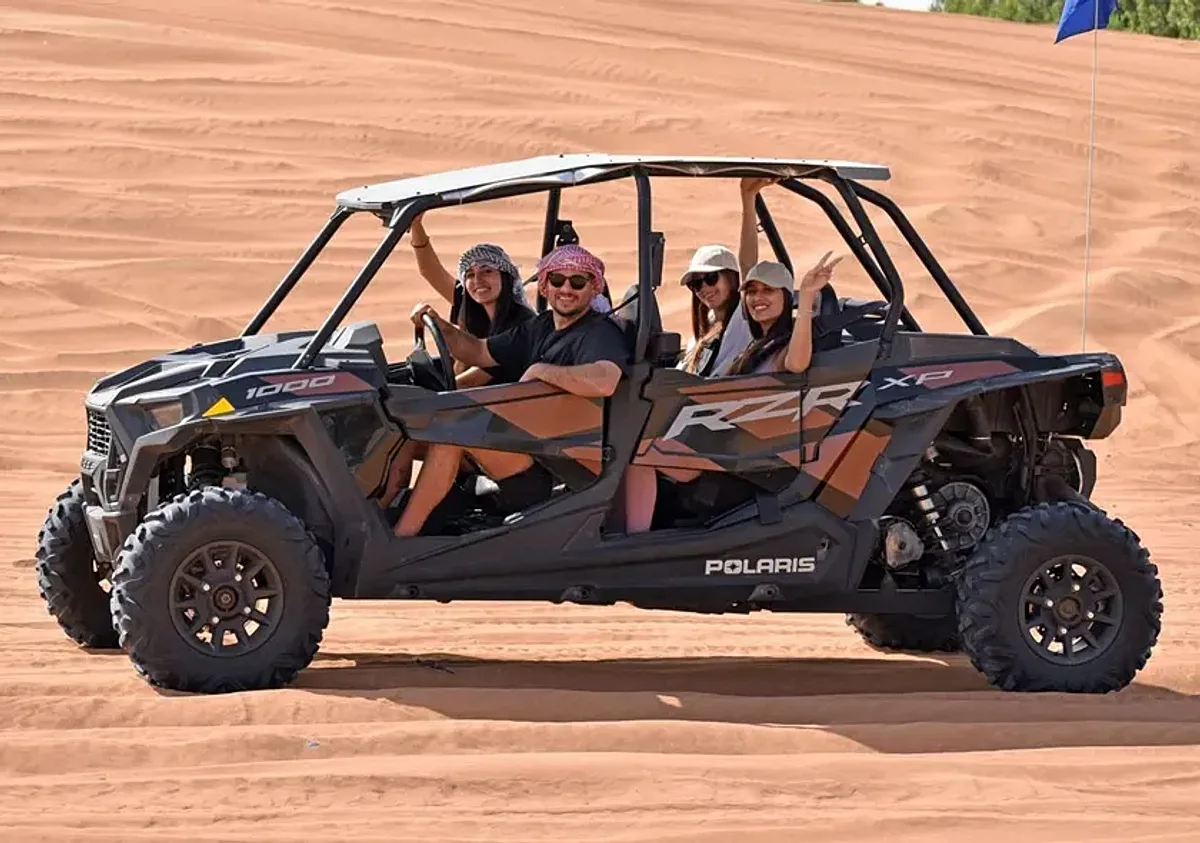
Activities beyond the drive vary widely. Sandboarding is offered by many operators, though the dunes in the standard safari areas are not always steep enough for a good run. Quad biking is another common add-on, but it is almost always an optional extra at an additional cost, not part of the base package. Read the inclusions carefully before booking.
Step 3: Check What the Camp Offers
The evening camp is where you will spend the most time. The quality of the camp matters a great deal to the overall experience. Basic camps offer a mattress on the sand, a simple buffet, and a short show. Higher-end camps have cushioned seating areas, carpets, better lighting, and a more extensive menu that may include grilled meats, salads, and desserts.
Some camps are located closer to the road, which means less time travelling but also more noise and light pollution. Others are deeper in the desert, offering a quieter setting and a clearer view of the stars. If the night sky is important to you, ask the operator whether the camp is in a dark-sky area. Most standard safaris do not include stargazing as a formal activity, but a remote camp still gives a better view than one near the highway.
Entertainment also varies. Most camps include a tanoura dance, a folkloric performance with a spinning skirt and lights, and a short fire show. Some include a falcon display or a henna painting station. Belly dancing is common but not universal; if you prefer a family-friendly show without it, check the programme in advance.
Step 4: Consider Group Size and Privacy
Shared safaris are the most affordable. You join a group of strangers in a 4x4, and the camp is shared with other tour groups. This is fine if you are a solo traveller or a couple on a budget. The main drawback is waiting times: the vehicle may pick up from multiple hotels, and the camp can feel crowded.
Private safaris cost more but give you a vehicle to yourself, a dedicated guide, and often a table reserved at the camp. Some operators offer a "royal" or "VIP" camp upgrade that includes a smaller, quieter area with waiter service. If you are celebrating a special occasion or simply value space and quiet, a private option is worth the extra cost.
For larger groups, some operators provide a bigger vehicle such as an SUV instead of a standard 4x4. Check the vehicle type and whether it can accommodate your party comfortably. A cramped ride in the desert heat can ruin the trip.
Step 5: Read the Fine Print on Inclusions and Exclusions
Many packages list a long set of activities, but not all are included in the base price. Quad biking, sandboarding, camel rides longer than a short loop, and alcoholic drinks are common extras. Some operators charge for henna painting or shisha (water pipe) at the camp. Others include them. The same applies to hotel transfers: some packages cover pickup and drop-off only from certain areas, while others charge extra for remote hotels or for transfers after midnight.
Dinner quality also varies. A standard barbecue buffet is typical, but some camps serve only pre-cooked food kept warm in chafing dishes. Higher-end options offer live cooking stations or grilled-to-order meat. If food matters to you, look for a safari that mentions "live BBQ" or "open kitchen" in the description.
One way to get reliable information is to check the Safari Desert Dubai official site for a clear list of what is included and what costs extra. A transparent operator lists these details plainly rather than hiding them in small print.
Step 6: Look at the Pickup and Drop-Off Arrangements
A safari involves a round trip from your hotel. The total time in the vehicle can be two to three hours on top of the desert activities. Some operators use shared minibuses that make multiple stops, adding another hour to the journey. If you prefer a direct transfer, ask whether a private vehicle is available and whether the pickup window is narrow.
Evening safaris return after dark. If you are staying in a hotel outside the main city areas, such as those near the Palm Jumeirah or Dubai Marina, check that the operator covers your location. Some only serve hotels in Deira, Bur Dubai, or near the airport. The same applies to resorts in the Al Barsha or Dubai Silicon Oasis areas.
Step 7: Compare Reviews and Recent Feedback
Reviews give a sense of what a safari is actually like, beyond the marketing copy. Pay attention to comments about the guide's driving style, the camp's food quality, and the punctuality of pickups. A pattern of late pickups or overcrowded camps is a real warning sign.
Also look at recent reviews from the past few months, not just the overall rating. Operators sometimes change their camp location, their vehicle fleet, or their catering provider. A safari that was excellent two years ago may not be the same today. For the most current information, the Safari Desert Dubai official site often lists updates about their camp and services, which can be more reliable than third-party listings.
Step 8: Consider the Season and Weather
Dubai's desert is extremely hot from May to September. Daytime temperatures above 45°C are common. Morning safaris in summer are still hot, but the early start helps. Evening safaris in summer are more comfortable because the sun sets by around 7 p.m. and the desert cools quickly after dark. Winter, from November to March, is ideal for any time of day, with pleasant temperatures and lower humidity.
Sandstorms can occur, especially in spring and early summer. If a storm is forecast, most operators will still run the safari but may shorten the outdoor activities. Some offer a flexible rescheduling policy. Ask about this before booking, particularly if you have a limited window for the trip.
Step 9: Know What to Bring and What to Wear
Comfortable, loose clothing in natural fabrics works best. Closed shoes are useful for sandboarding or walking on hot sand. A light jacket or scarf helps after sunset, when the desert can become cool even in summer. Sunglasses and a hat are essential for the afternoon sun.
Most camps provide a small mat or carpet to sit on, but if you are particular about comfort, a small cushion or a sarong can make a difference. Sunscreen is a must for any daytime exposure, and insect repellent is useful at the camp after dark, especially near any vegetation or water features.
Step 10: Book Directly When Possible
Booking through a tour aggregator is convenient, but the operator you actually go with may be different from the one listed. To avoid surprises, book directly with the company that runs the safari. You get a clearer view of the inclusions, and you can ask specific questions before paying. Direct booking also makes it easier to change or cancel if your plans shift.
Take time to compare a few options. The right safari is out there. It just takes a bit of sorting to find the one that fits your group, your budget, and your idea of a great evening in the desert.
 Facebook
 Instagram